Pages

Saturday, March 10, 2012

Pictures of LEDC and MEDC

My group's definition of a LEDC:
A country that is not fully developed, meaning that it's not planned well and rely on other countries to earn the money, and the residents are less economically advantaged, like it doesn't have the basic needs, like medical.
Pictures:
http://www.geography.learnontheinternet.co.uk/images/urban/ledc/Rocinha_Favela.jpg

My group's definition of a MEDC:
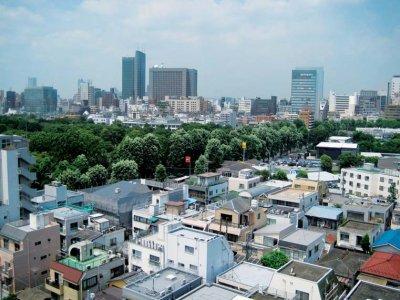
A country that is more organised and have  all properties and basic needs and high paid loans.
Pictures:
http://www.japaninc.com/files/mgz-80_japan-housing_400x300.jpg
http://www.isbiostat.org/shanghai/nanjingroad1.jpg

Wednesday, March 7, 2012

Restless Earth ELP reflection

Elp avalanche leaflet done by Zhermaine
View more presentations from ZhermaineWong.


Reflection
My success criteria were making a successful leaflet and learn about avalanche, and I had achieved them. I learnt quite a lot of things, like for example, I learnt that avalanche suddenly happen on the middle of a slope/cliff, and not the sides of it. I'm learning this so that maybe some day, I will move into a country/place where there are snows and I know how to make precautions when an avalanche is coming. The thinking skills I used in this ELP were creativity and asking questions to able to answer. My next targets will be (i) to be organize and (ii) set deadlines.

Monday, March 5, 2012

Reflection Beginning Topic Is this a fair world?

  • What do you think our topic 'A Fair World' is going to be about? It's about how develop change economically and socially in times
  • Why are we learning about it? To know how we human change the world
  • What questions/topics are you interested in investigating? Why the world is this form, like why some children are not having the privilege as us. 

Thursday, March 1, 2012

Restless Earth Reflection

1. Why and how is the earth restless?
The earth is restless because the earth is constantly changing shape. For example, there's a small fishing town in Japan. After last year tsunami and earthquake, the town is gone.

2. What causes the natural disaster?
Different disasters have different causes. For example, tsunami are caused by 3 ways-landslide, underwater earthquake and volcanoes.
3. Where do natural hazards occur?  Are there any patterns to this distribution?
Natural hazards depends where it occur. For example, tsunami occured in Asia because in Asia, there's the biggest ocean called the Pacific Ocean.
4. How do we live on a restless earth?
We live on a restless earth by we learn how to prepare before the disasters come.

Reflection
The key question of this topic was the 4 questions above. I think this topic is important because we need to know about our Earth more. It's also may help us for our future job, like being a geologist. The most I enjoyed during this topic when we learn more about cyclones from Ms Glenda because I didn't know anything about cyclones and I was able to ask the questions that I want to know. Also, I enjoyed doing the Hazard Fair because it developed my teamwork skills and I learn more about tsunami by learning from the internet and other resources. I really enjoyed this topic a lot. I used quite a lot of skills in this topic, like teamwork, organize myself, plan and research, and creativity. The key idea I think people should be aware is that they should know how to protect themselves from the natural disasters. I rate myself for level of knowledge and understanding :), for progress :D, and enjoyment :D. The three targets I could set myself to help me making progress in my learning are organize myself by setting deadlines, planning like for the Hazard Fair, my group should have decide a final decision, not slowly keep adding new ideas, and develop more for my learning, not just research the basics.

Tuesday, February 21, 2012

Reflection of Hot Seating with Ms Glenda

I learnt how to ask questions and the questions must be "outside of the box", like not just ask questions like "How was it after the cyclone hit?" and ask questions like "What is your advice when a cyclone is about to hit Malaysia?" The skills I used are asking questions, teamwork and empathy because as a group, we have to decide what questions to ask. I achieved my LI because I did what it said: to ask revelant questions, understand more about Cyclone Tracy, and listen to her effectively. When I was listening, I really interested because I don't really know about cyclones and it's my first time(I think) to listen to what people that had experienced in a cyclone or any natural hazards. I can use this learning to my ELP by asking the 5W and 1H for my natural hazard.

It was a really fun activity for me! :D